
Your Launch Video Isn’t a Story!

Who is a good storyteller, and why do they matter?
I’m reminded of Steve Jobs speaking in a 1996 interview about Pixar. He was asked—somewhat incredulously—why the founder of Apple was running an animation company. His answer, paraphrased, was simple.
In Tech, if you’re lucky, what you build lasts a few years. If you’re really lucky and you’ve built a masterpiece, maybe ten or fifteen years. Most great films, stories and music outlive their creators. They invite interpretation & lore long after the world that produced them has changed.
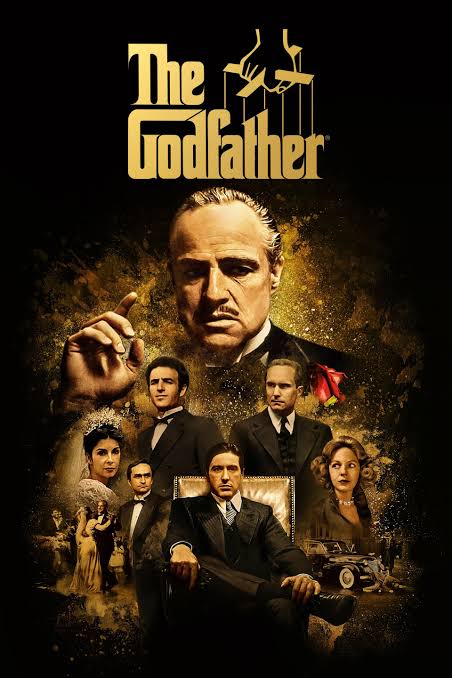
The point about tech is you don’t use Blackberry phones today, and yet you listen to Doors or watch the Godfather. Good technology gets outdated, good art ages like fine wine.
We don’t watch Charlie Chaplin’s films today the way audiences did in the 1930s. Chaplin’s worldview was shaped by the zeitgeist of WW1. Those movies are consumed with an entirely forgotten context now - but the films are still relevant.
That’s the power of story.
Borrowing, not copying
When we make Hollywood-style commercials for tech companies, we are constantly borrowing from stories told before us. We borrow from the films we’ve watched. Often it’s just a single shot which moves us to recreate its emotional geometry. And I don’t mean copying, that’s a fine line. I mean, borrowing - authentically and originally.
Originality is the art of concealing your source. It doesn’t matter where you’re taking things from, but where you take them to. I know this statement is an oxymoron in today’s day and age - and that’s my point. Nothing original has ever been created and yet my argument is for originality. Take an old story and put a little bit of yourself in there, and you have something new.
A good storyteller knows how much of what to put in. It’s like cooking. That’s why when someone is in a flow state - we say let them cook.
Storytelling is calibration
Let’s say, a tech product is about speed, customer onboarding and scaling revenue. Its storytelling should not be about shouting all three equally. It’s about knowing the exact ratio and proportion of every ingredient that defines the product and its story.
Most people can get this roughly right. But roughly doesn’t create memorability. You don’t measure drama, humour and awe, in round numbers. You measure them in fractions. It’s a perfect calibration of vague things.
That calibration is storytelling.
Why launch videos don’t stick
Over the past year, I’ve watched dozens of product launch videos come and go. And almost every time, the same thought returns later: Why don’t I remember any of them?
Was the launch video simply a box to be checked - something that had to exist?
Most people in tech understand that having a story matters. What they don’t understand is why it matters? And why are they bad at telling it?
Investors vs customers
Explaining your product to investors is one thing. Explaining it to customers is another. Investors listen for differentiation on paper - features, metrics and marginal advantages.
But that’s not what customers listen for, they ask:
- Where does this product sit in my life?
- What anxiety does it remove?
- Does it make me feel good?
Most launch videos of the last year were made as if the audience was a room full of people with infinite patience. It gets them praise in the small echo chambers. They amuse, but don’t sit rent free in your audience’s head. The result is content that is technically correct, visually competent but emotionally forgettable.
Production vs expression in the GenAI era
And we all know this becomes worse in the age of GenAI. When generating words and visuals becomes cheap, companies that greenlight these stories start mistaking production for expression. In order to ship fast, they compromise depth. Stories arrive fully formed - and already dead.
The people building these products are mostly techies. And it’s not their fault. They understand Boolean logic. Zero and one. They are excellent at building solutions.
They forget something basic: A solution for who?
All products exist to solve problems. And problems happen to people.
Customers are people, not stats
Why is it so hard to see customers as people? Someone with a life. Someone trying to finish work quickly to make it to a game with friends. Someone running late for a date. Someone having a bad day.
And when things don’t work - you do something bizzare. You meme distribution to death. And six months later, you wonder why nothing is working, why there is churn?
Here’s why it happens - you treat your customer as a stat, and your customer treats you as a meme.
Brand-building in tech is hard. And only a few companies actually understand what it requires. Apple. NVIDIA. Figma. Adobe. They speak exactly what matters. They know who matters. They aren’t interested in talking to everyone.
Now, contrast that with a 21-year-old founder who has raised a few million dollars and promised investors aggressive growth. That founder is almost forced to believe that reach is survival. He confuses virality for strategy.
So the content gets louder. Founders are made to look cool. (I do think they are cool.) Really cool. But not in the way I’ve seen them in the past year. They are cool when they are true and authentic to themselves and the company.
Ragebait, distribution, and the game you’re playing
Last year, a lot of attention went to a company called Cluely. I respect the founders for how they cracked distribution. Their belief seems to be that no publicity is bad publicity. And they are good at that. They write mean blogs, ragebait and it would be foolish to say they don’t know what they are doing.
Maybe that works.
But the real question is: what game are you playing?
The founder is the chief storyteller
Which brings me back to the original question: Who is a good storyteller, and why do they matter?
The answer - it’s the founder. In an ideal world, the founder is the chief storyteller. This is not a job that can be outsourced. You can hire craft. You cannot outsource belief.
And Silicon valley knows this. So in the ritual of naming things, they named it Founder Led Marketing. Founders with rehearsed dialogues, in front of a camera, sitting in a lavish office space with the Apple aesthetics. But you can memorise an entire poem and never feel it. That’s what it feels like to me.
On the other hand, you have Cristóbal Valenzuela at Runway. He talks less about features and more about direction. He shares model’s outputs occasionally, but mostly he talks about where this generational shift in creativity and media is headed. The state of things. He doesn’t tweet obituaries for Adobe or Hollywood. He doesn’t ragebait. He isn’t pining for distribution on X.
Every time you put content into the world - whether it’s thoughtful or sloppy - remember that it carries your signature. It tells people what you stand for. I write this article knowing it bears my signature. And I stand for it.
Don’t check boxes. Make stories.
In the end - the moment you choose to tell a story, you are no longer competing only with your competitors. You are competing with everything that has a story.
Most briefs we’ve gotten in the past year are about vibes. Not story, vibes. I have nothing against vibes, just give me a little bit of story while we are at it.
Don’t check boxes. Make stories. Long term, beautiful stories that outlive you. That’s the way to go.
More Blogs
Exploring the intersection of filmmaking, tech, products, positioning, marketing, and storytelling.


